Queue Management System in Saudi Arabia: Pairing Fast Checkout With Smart Lines in 2026
Speed at the counter defines the modern customer experience. A capable queue management system in Saudi Arabia, combined with fast barcode scanning, is how forward-thinking retailers and service centers keep lines short and satisfaction high. In 2026, the two technologies work best together.
This article explores how organized queues and reliable scanning hardware create a seamless flow from the moment a customer enters to the second they leave. If you manage a store, pharmacy, or busy service desk, these are the tools that quietly protect your revenue.
Why Queue Management and Scanning Belong Together
Most businesses treat queuing and checkout as separate problems. That is a mistake. A customer waiting patiently in a well-run line will still walk away frustrated if the final transaction is slow, glitchy, or held up by a scanner that will not read a barcode.
By pairing an intelligent queue system with dependable scanning hardware, you remove friction at both ends of the visit. The result is a smoother journey, faster throughput, and staff who can serve more people without feeling rushed.
The benefits stack up quickly:
- Fair, orderly lines that reduce customer stress
- Fast, accurate scanning that speeds up each transaction
- Fewer bottlenecks during peak hours
- Reliable data on both wait time and service time
- A more professional, modern brand impression
How a Modern Queue System Improves Service Flow
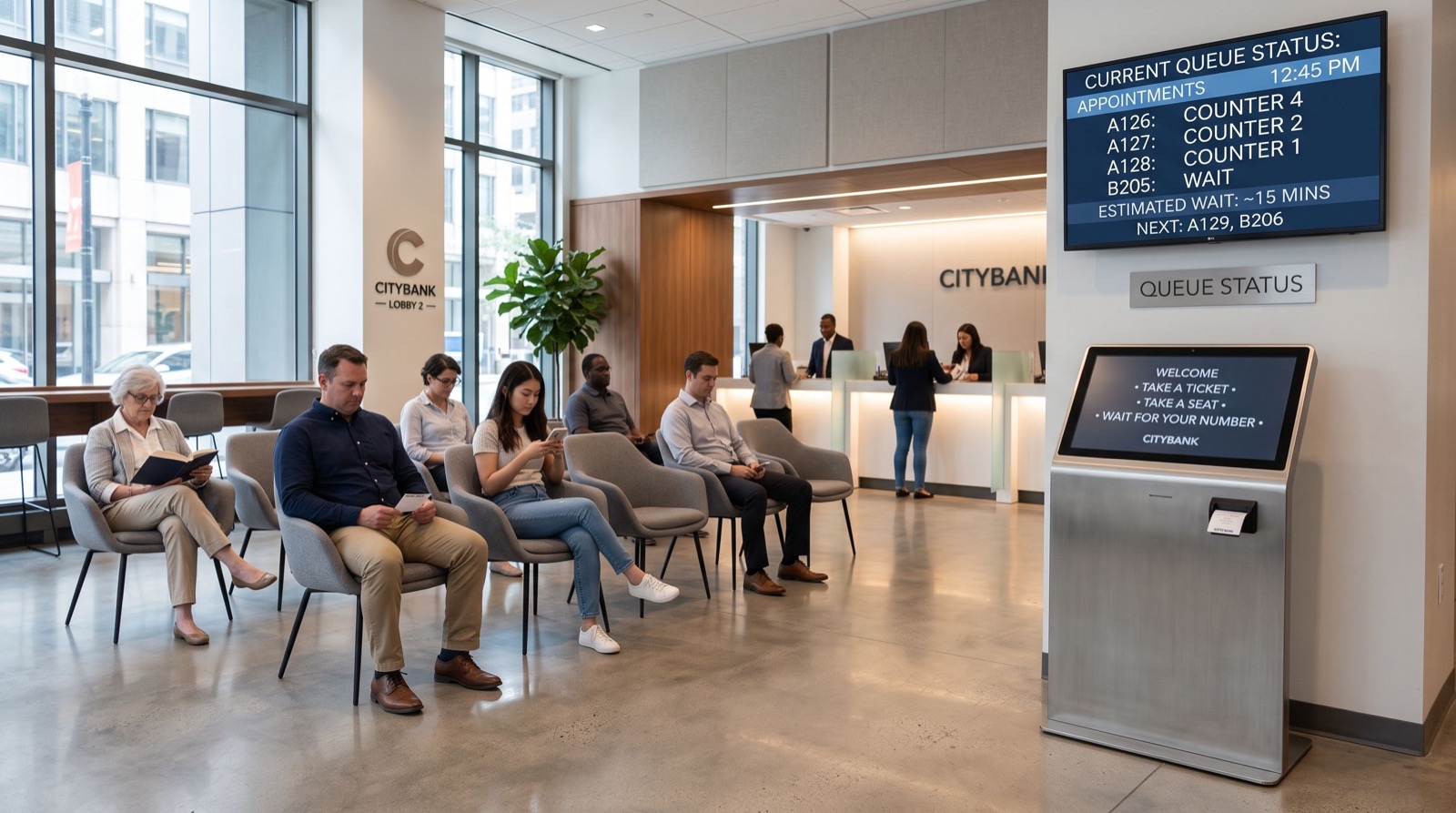
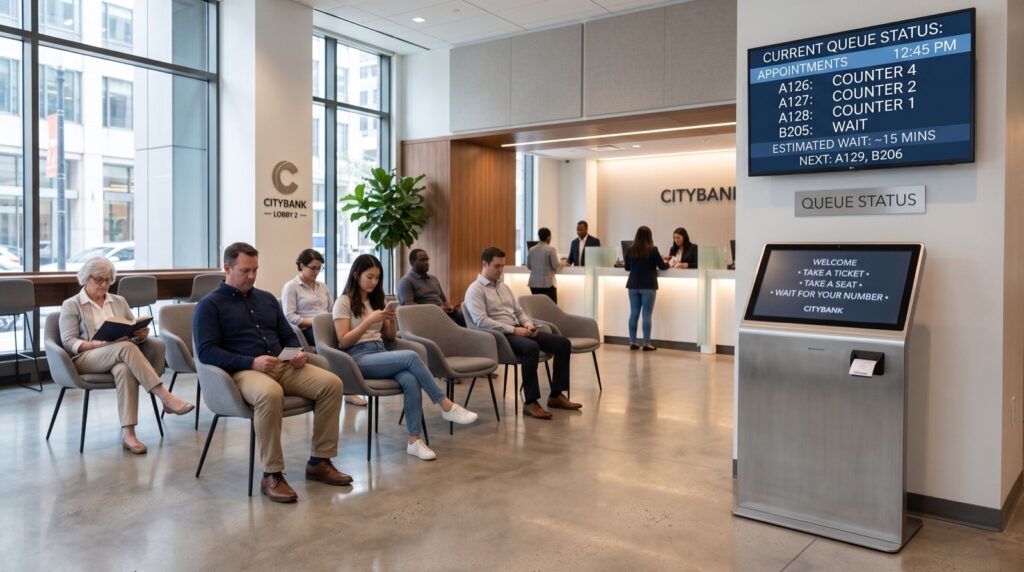
A queue system does more than hand out tickets. It routes customers to the right counter, keeps them informed, and gives managers a live view of performance. Deployed well, it turns a crowded lobby into a calm, predictable environment.
The Customer Journey Step by Step
Understanding the flow helps you see where time is won or lost. Every stage is an opportunity to improve.
- The customer checks in at a kiosk and selects a service.
- The system issues a ticket and estimates the wait.
- Display screens announce ticket numbers and counters.
- Staff call the next customer from their terminal.
- Analytics capture wait time, service time, and volume.
Providers such as the queue management system in saudi arabia team design these workflows to fit your layout, whether you run one desk or a dozen branches across the Kingdom.
Choosing the Right Barcode Scanner for Fast Checkout
Scanning hardware is where many businesses cut corners, then regret it. A slow or unreliable scanner creates the exact bottleneck your queue system was meant to prevent. Choosing quality hardware pays off every single day.
What to Prioritize in a Scanner
Focus on read speed, durability, and versatility. A good scanner handles printed labels, damaged barcodes, and mobile screen codes without hesitation.
- Read performance: fast, first-pass reads on 1D and 2D codes.
- Mobile-code support: the ability to scan barcodes off a phone screen.
- Ergonomics: comfortable design for high-volume counters.
- Durability: tolerance for drops and constant daily use.
- Easy integration: plug-and-play with common POS systems.
A proven area-imaging option is the Honeywell Vuquest 3320g, a compact scanner built for rapid, reliable reads in retail and healthcare settings. It captures both traditional and on-screen barcodes, which matters as more customers pay and check in from their phones.
Comparing Scanner Types for Your Counter
Different environments call for different scanners. The table below helps you match hardware to your use case.
| Scanner Type | Best For | Strength | Watch Out For |
|---|---|---|---|
| Handheld area imager | General retail, pharmacy | Reads 1D, 2D, and phone codes | Needs a stable USB or POS link |
| Presentation scanner | Hands-free counters | Fast, no-touch scanning | Fixed position |
| Rugged industrial scanner | Warehouses, logistics | Survives harsh conditions | Higher cost |
| Wireless scanner | Large-format stores | Mobility across the floor | Battery management |
Does Better Hardware Really Reduce Wait Times?
Yes, and the effect compounds. If each transaction is even a few seconds faster, those seconds multiply across hundreds of daily customers. Shorter service times mean the queue moves faster, which shortens the wait for everyone behind.
Combine that with a queue system that routes customers efficiently, and you attack the problem from both directions. This is why experienced integrators recommend upgrading queuing and scanning together rather than in isolation.
When you need help selecting and installing the full stack, work with reliable local experts who understand both the software and the hardware side of the equation.
In practice, the biggest gains come from small, consistent tuning. A store that reviews its scanner error logs each week catches failing units before they slow a whole counter. A branch that watches peak-hour queue data can shift one staff member at the right moment and cut the average wait noticeably. The technology supplies the numbers, but disciplined follow-through delivers the results.
Getting the Most From Your Investment
Deploying the technology is only step one. To capture the full return, treat the data as a management tool, not a report you file away.
Practical habits that pay off:
- Review peak-hour reports weekly and adjust staffing.
- Track scanner error rates and replace failing units early.
- Set wait-time targets and share them with the team.
- Collect customer feedback at the point of service.
- Retrain staff whenever you add new services or hardware.
For industry-standard guidance on barcode symbologies and data-capture practices, GS1 maintains the global standards that most retail scanning follows. You can review them at the GS1 global standards organization.
Frequently Asked Questions
Do I need a queue system and a scanner, or just one?
You can start with either, but the two solve different halves of the same problem. A queue system organizes the wait, while a fast scanner speeds up the transaction. Together they deliver the smoothest customer experience and the best throughput.
Will a Honeywell Vuquest 3320g work with my POS?
In most cases, yes. Area-imaging scanners like this connect through common USB or keyboard-wedge interfaces and integrate with standard point-of-sale software. A local integrator can confirm compatibility and handle the setup.
Can these systems scale as my business grows?
Absolutely. Quality queue platforms let you add counters, services, and branches over time. Scanners are modular too, so you simply add units at new counters. Plan for growth from the start to avoid costly rework later.
How do I measure whether the investment paid off?
Track wait time, service time, and transaction speed before and after deployment. Watch abandonment rates and customer satisfaction scores. Faster, calmer service that keeps more customers through the door is the clearest sign of a strong return.
Conclusion: Build a Faster, Friendlier Service Experience
In 2026, customers judge a business by how quickly and smoothly it serves them. A well-integrated queue management system in Saudi Arabia, paired with dependable scanning hardware, delivers exactly that combination of order and speed.
Ready to shorten your lines and speed up checkout? Reach out to an experienced provider, request a demo, and see how the right queue and scanning technology can transform your counter this year.